The next competitive advantage is deeply human.
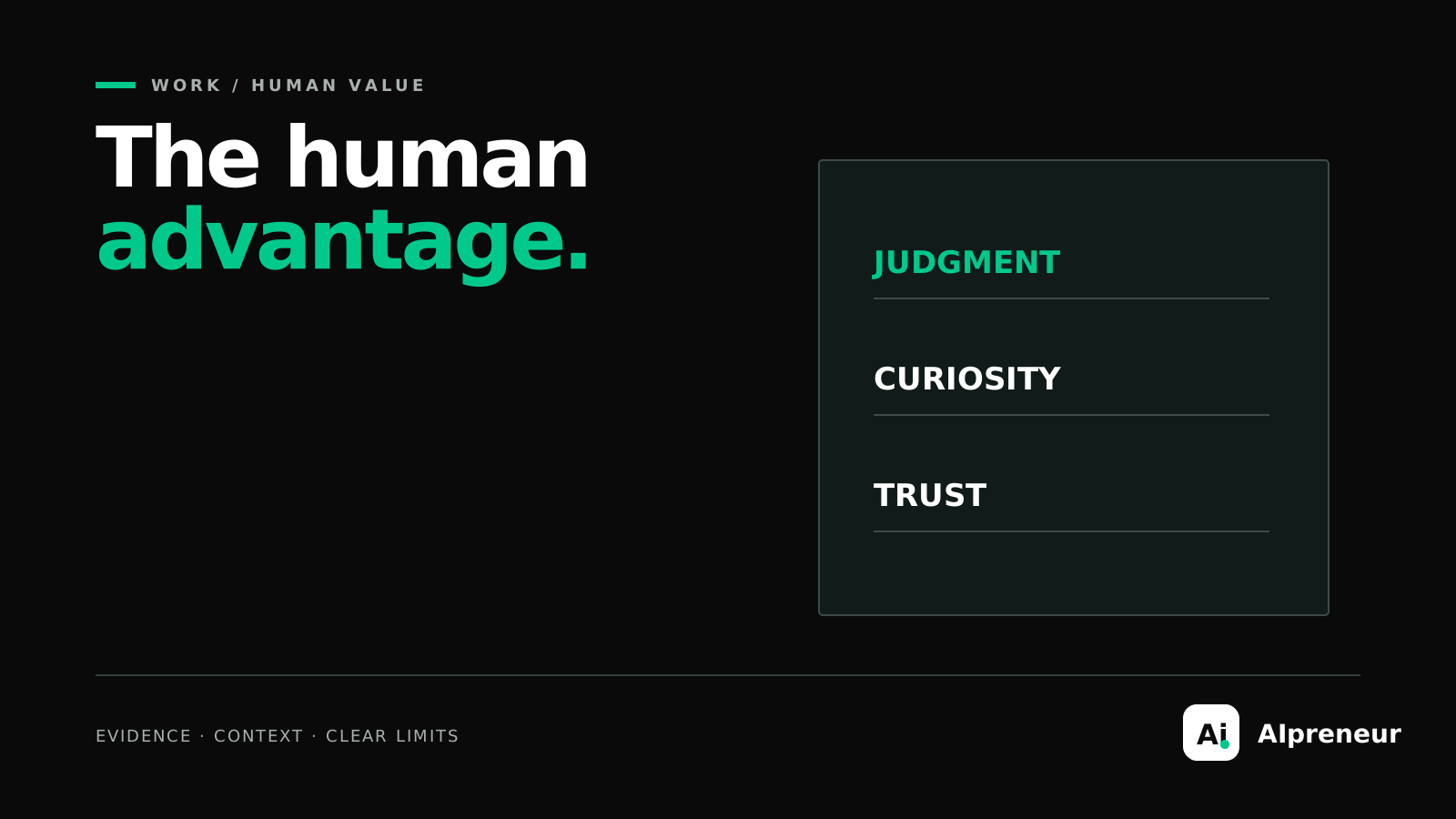
When intelligence becomes more accessible, judgment, curiosity and trust become more consequential.
When answers become abundant
A tool can generate a dozen proposals before a team has agreed on the problem. That abundance changes the work. Choosing the right question, understanding a customer and taking responsibility for a decision become central. Access to an output is only the beginning of creating value.
For an AIpreneur, the interesting question is what happens around the output. Who notices that a customer’s request is really about something else? Who recognises an exception that the process was never designed to handle? Who decides that a plausible answer is not yet good enough to act on? These are parts of the work that a count of generated documents will miss.
Judgment needs a setting
Consider a small business preparing an estimate. An assistant might turn notes into a clear proposal, check for missing fields and suggest a delivery schedule. But the estimate also contains promises. Someone who understands the workshop’s capacity, the supplier’s reliability and the customer’s expectations needs to decide whether those promises can be kept.
That person’s contribution is not an extra layer to remove once the drafting gets better. It is part of how the proposal becomes useful. The business is selling an outcome, and the words on the page are a commitment to deliver it. A fluent document is only one ingredient.
This suggests a different approach to designing a workflow. Begin by identifying consequential decisions. Ask what information each decision needs, who understands that information and what would happen if the decision were wrong. Then decide where assistance can make the person’s work clearer or more manageable.
Make the human contribution visible
A useful trial might record not only the time taken to produce a draft, but the corrections a reviewer makes. Are those corrections cosmetic, or do they change the substance? Does the tool help a less experienced colleague ask better questions? Does it give an experienced colleague more time for the cases that need attention?
Those observations can reveal where expertise sits in a business. They can also prevent a misleading conclusion: that a shorter first step necessarily makes the whole process better. If review and repair consume the time saved in drafting, the work has moved rather than improved.
A practical starting point
Choose one recurring piece of work. Describe the customer’s desired outcome, the decisions along the way and the person accountable for the result. Test an AI-assisted version alongside the existing process. Keep notes on where the assistant helps and where human attention remains essential.
The aim is not to defend every existing task. Some tasks may disappear, and others may change substantially. The aim is to understand the contribution before redesigning it. For a builder, that understanding can be a more durable starting point than a demonstration of how much a model can produce.
Start with judgment, not output.
The question behind every AIpreneur piece: why does this matter to someone building, creating or contributing to the AI economy?
← Back to News