Small is a serious strategy.
What becomes possible when a small team can stay close to a very specific problem?
The advantage of being close
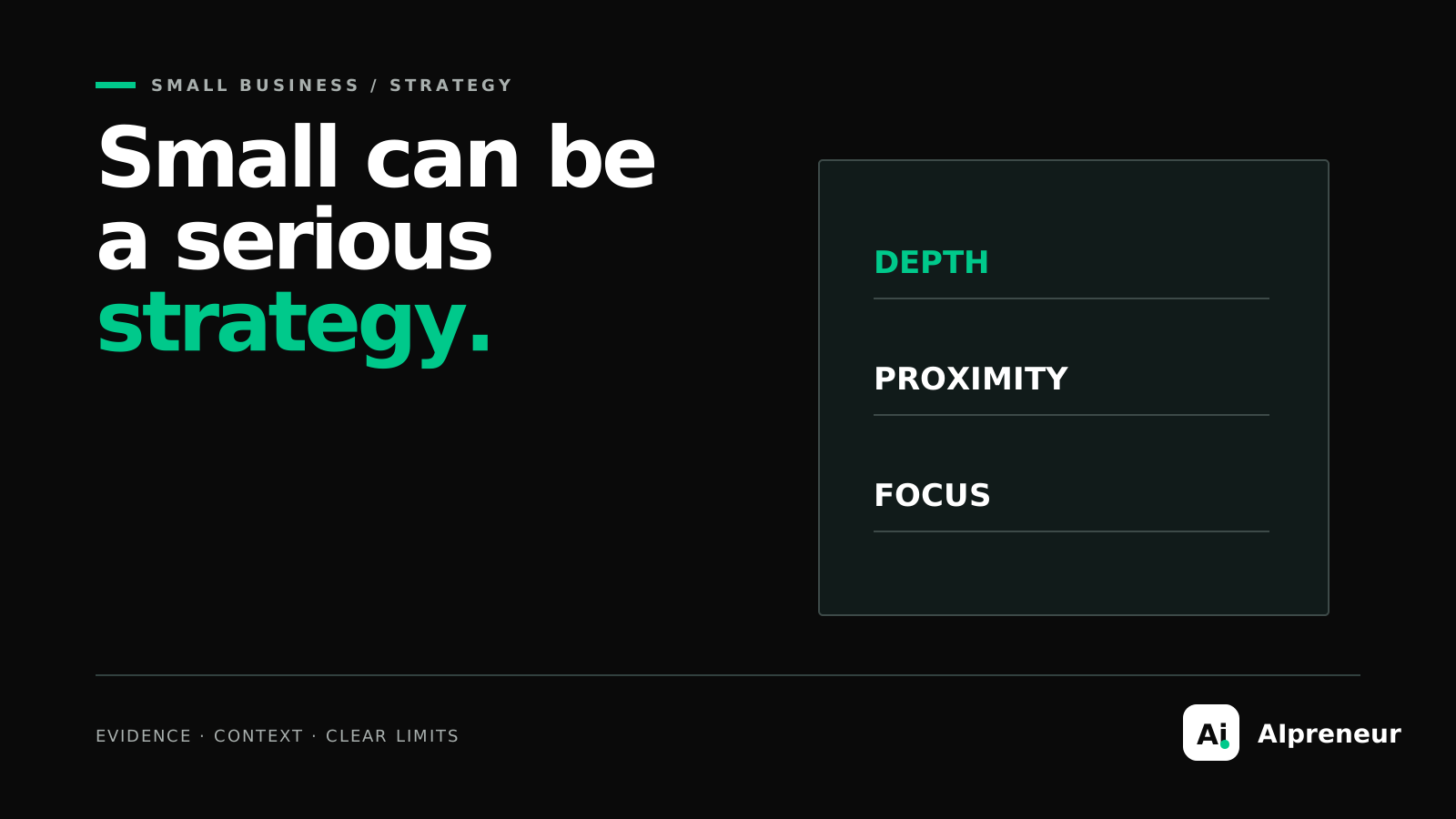
A small team has limited capacity, but it may have unusually direct access to its customers. AI can help with drafting, sorting and prototyping. The strategic question is how that capacity serves the customer, rather than how many disconnected tasks the team can automate.
Closeness can make a narrow opportunity visible. A team that hears the same difficult question every week may understand its context better than a distant competitor. It knows the workarounds, the terminology and the point at which a generic answer stops being useful. Those details can provide the foundation for a focused service.
Capacity is a choice
Suppose an operator saves time preparing a routine report. The business could use the time to prepare more reports. It could also use it to check unusual cases, speak with customers or improve the information entering the process. The value of the change depends partly on that second decision.
A small team cannot pursue every possibility at once. Treating newly available capacity as a scarce resource encourages a useful conversation about priorities. Which customer problem deserves more attention? Which promise is difficult to keep? Where would a little more care make a noticeable difference?
The answers may support a deliberately narrow strategy: serve one kind of customer, understand one workflow deeply and become dependable at a specific outcome. That is a different ambition from adding a broad set of features simply because they have become easier to build.
Keep the economics in view
A focused service still needs a workable operating model. Count the time spent reviewing results, explaining the service and resolving exceptions. Include the cost of maintaining an integration and helping customers when the underlying tool changes. A low generation cost does not make the entire service inexpensive to deliver.
A small trial can make those costs visible. Record both successful cases and the cases that require manual attention. Ask whether the customer values the outcome enough to sustain the work needed to provide it. This is a question about the business, not just the capability of the software.
Depth can be a direction for growth
Staying small in scope does not mean staying still. A team can grow by understanding a problem more deeply, improving reliability or serving neighbouring needs that it has encountered directly. Each step can build on evidence from the previous one.
For an AIpreneur, the possibility of doing more is useful precisely because it creates choices. The discipline lies in deciding which choices strengthen the work. A narrow service that customers understand and depend on can be a serious contribution to the AI economy.
Choose depth before breadth.
The question behind every AIpreneur piece: why does this matter to someone building, creating or contributing to the AI economy?
← Back to News