The creative economy is bigger than output.
Why a faster draft does not settle the question of what makes creative work valuable.
The draft is one part of the work
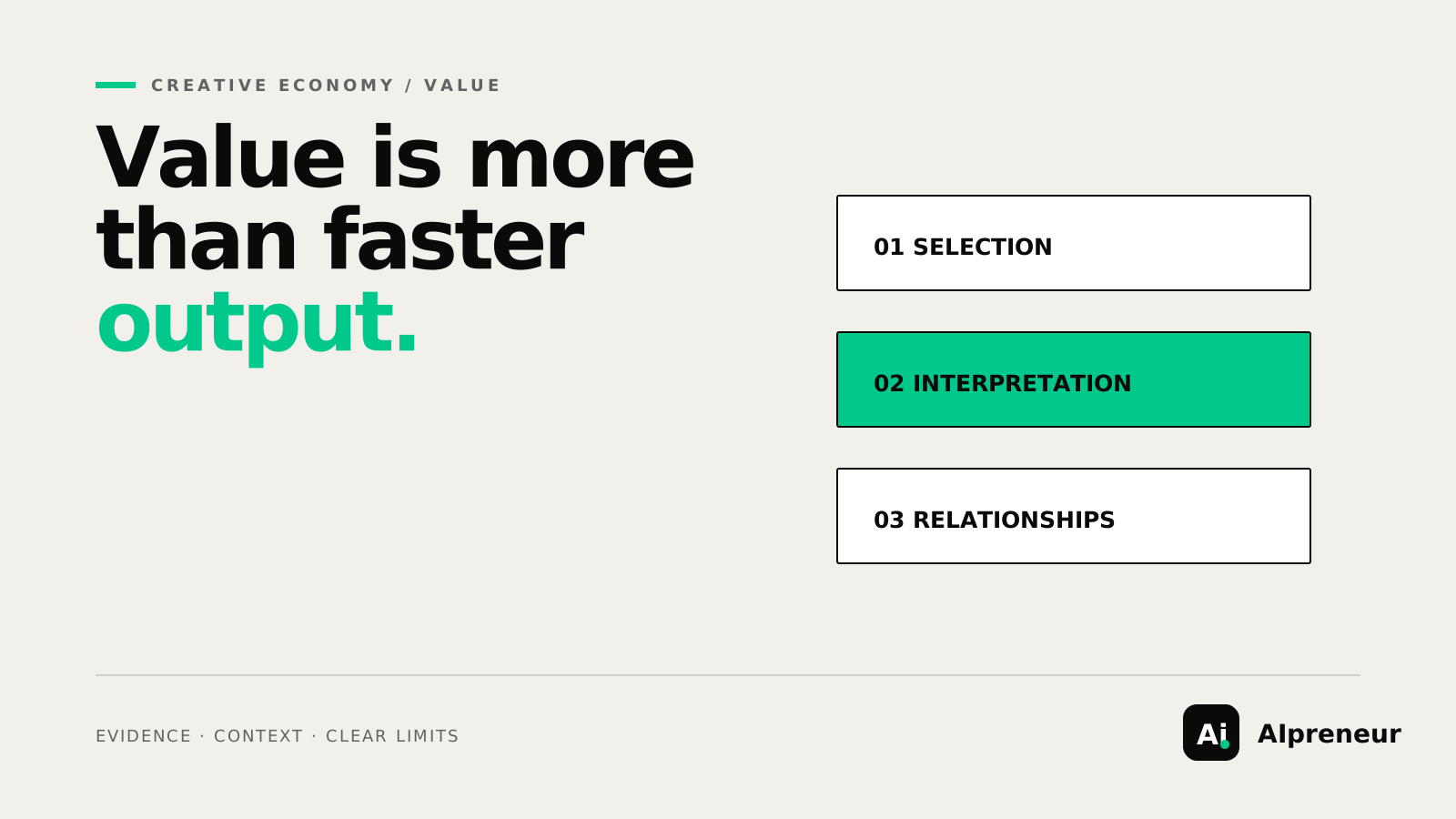
Creative work creates value through selection, interpretation and relationships as well as production. A faster draft can support that work, but volume alone does not explain why someone commissions it. The more useful question is what a creator can now explore, and what still needs their particular attention.
A commission often begins with an incomplete brief. The client knows something needs to change but may not yet know how to describe it. The creator listens, asks questions and proposes a direction. That exchange is part of the work, even when the visible deliverable is an image, a piece of writing or a finished object.
Exploration needs a point of view
Generating alternatives can help a creator compare directions. It can also create a new burden of selection. A folder full of possibilities does not explain which one belongs in the project or why. Without a point of view, variation can become an activity that postpones a decision.
A useful experiment begins with an intention. What are you trying to understand about the brief? Which assumption are you testing? What would make one direction more appropriate than another? These questions give the exploration a purpose and make it easier to recognise when it has done enough.
The creator’s context matters here: experience with a material, knowledge of an audience or sensitivity to the setting in which the work will appear. Those forms of understanding influence the choices that make a result distinctive. They are not captured by the number of drafts produced.
Be clear about the process
Clients and collaborators may have different expectations about AI-assisted work. Discuss those expectations before the process becomes difficult to change. Clarify which tools are involved, which information can be shared and which parts of the work require a specific form of authorship or permission.
Keep records where they help explain the development of the work. This can include the source material, the decisions made and the contributions of collaborators. The purpose is to make the process understandable, especially when questions arise after the final piece has left the studio.
Ask what becomes possible
A tool may make a previously impractical experiment affordable, help a creator investigate an unfamiliar format or reduce the administrative work around a commission. Those possibilities deserve attention on their own terms. They do not require a claim that every part of creative work should become faster.
For an AIpreneur in the creative economy, the opportunity is to connect new capabilities with a considered practice. Protect the choices that give the work meaning. Evaluate tools by whether they help you make and explain those choices, as well as by what they produce.
Protect the choices that give the work its meaning.
The question behind every AIpreneur piece: why does this matter to someone building, creating or contributing to the AI economy?
← Back to News